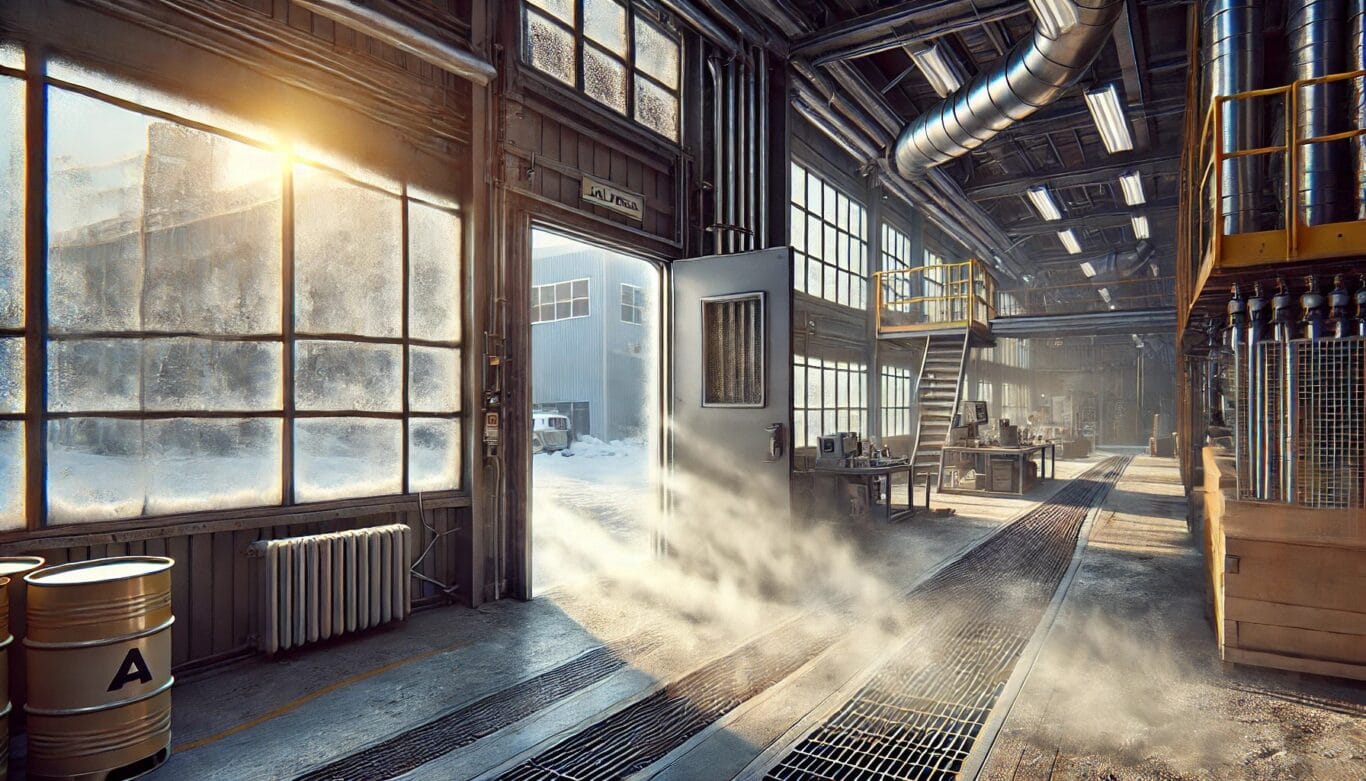
Air can hold different amounts of moisture depending on the temperature. Warm air can hold significantly more moisture than cold air.
When warm air from a surrounding area enters a freezer room, it cools down rapidly. The moisture in the air condenses and turns into fog, frost, or ice.
The consequences can include:
- reduced visibility
- ice formation on floors and equipment
- risk of slipping
- higher maintenance costs
- increased strain on the refrigeration system
- greater energy losses
The more frequently the opening is used, the greater the problems become.
Example: Fog formation in an opening between two temperature zones
The videos below show the difference between an opening without climate separation and the same opening with an air curtain installed.
When no air curtain is used, the warm and cold air mix directly in the opening. This results in significant fog formation and an increased risk of frost and ice.
When the air curtain is activated, the mixing between the temperature zones is reduced, keeping the opening significantly clearer.
How Does an Air Curtain Work in a Freezer Room?
An air curtain creates a controlled air barrier between two environments with different temperatures.
The purpose is to reduce air exchange between the zones, thereby limiting the amount of warm, humid air that reaches the freezer room.
This is particularly important in freezer environments, as even small amounts of moisture can cause significant problems over time.
You can also read: How do air curtains to freezers work?
Vad är Powerstream?
Powerstream is Masterveil’s solution for freezer environments with high requirements for climate separation.
The system uses an insulating layer of air that helps keep warm and cold air separated, even when the opening is used frequently.
The aim is not only to reduce energy losses but also to limit the problems that arise when humid air enters the freezer environment.
Fördelar med att minska fuktinträngningen
When less warm air reaches the freezer room, the risk of the following is also reduced:
- fog in the opening
- frost formation
- ice on floors and equipment
- slipping hazards
- unnecessary strain on the refrigeration system
At the same time, the climate in the freezer room becomes more stable and easier to control.
You can also read:
How Findus Overcame Ice Formation in Its Cold Storage Facility
When is this type of solution relevant?
This type of solution is particularly relevant in:
- cold storage facilities
- the food industry
- distribution centres
- logistics facilities
- operations with frequent traffic through freezer doors or gates
If fog, frost, or ice formation is a recurring problem, it is often a sign that the air exchange between the temperature zones needs to be better controlled.
Do you need to reduce fog or ice formation in your freezer room?
If you are experiencing recurring problems with moisture, fog, or ice formation, it may be worth reviewing how the opening between the temperature zones works in practice.
Contact Masterveil and we will help you assess the environment and find a solution that meets the needs of your operation.